
Under cabinet lighting is one of the best upgrades you can make to a kitchen. It improves task lighting, adds ambiance, and makes food prep safer and more enjoyable. But there’s one downside that can ruin the look: visible wires.
Hanging cords and exposed cables can make even the most beautiful kitchen look messy and unfinished. The good news? There are several practical ways to hide those wires — and most of them are easier than you think.
In this guide, we’ll walk you through the best methods to conceal wires under cabinet lighting, from simple DIY solutions to more permanent installations.
Why Hiding Wires Matters
Beyond aesthetics, hiding wires under cabinet lighting offers several benefits:
| Benefit | Why It Matters |
|---|---|
| Cleaner appearance | Creates a polished, professional look |
| Safer kitchen | Reduces tripping hazards and prevents wires from catching on objects |
| Easier cleaning | Fewer exposed surfaces to wipe around |
| Higher perceived value | A tidy installation adds to the overall quality feel of the kitchen |
Method 1: Use Wire Channels or Raceways
Best for: Quick installation, retrofits, renters
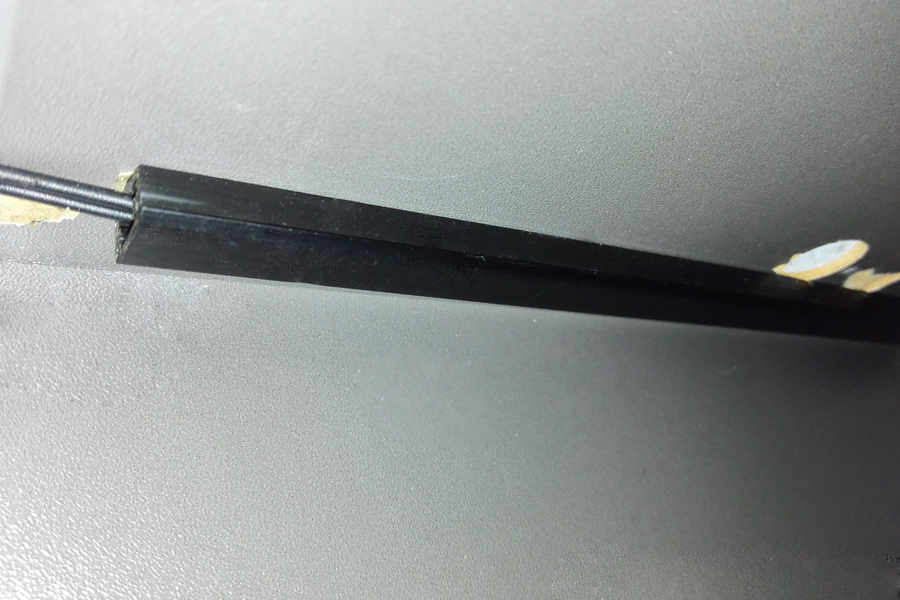
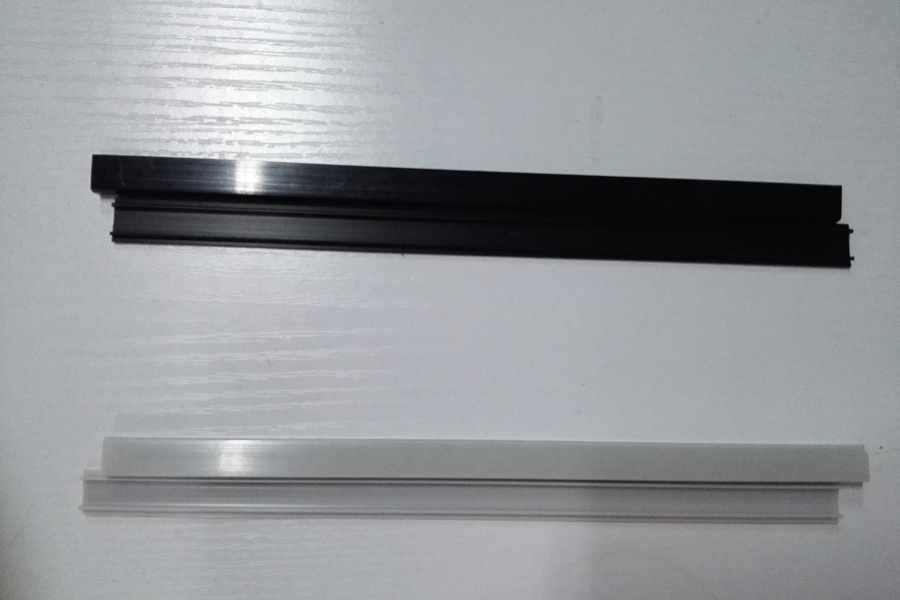
One of the simplest and most effective ways to hide wires is by using wire channels (also called raceways or wire molds). These are plastic or metal covers that attach to the underside of your cabinets or along the wall, with wires running inside .
How to Install:
- Measure the length of the wire from the light fixture to the power source
- Cut the wire channel to size (most are easy to cut with scissors or a utility knife)
- Peel the adhesive backing and stick the channel along the cabinet underside or wall
- Run the wires through the channel and snap the cover closed
Pro tip: Wire channels can be painted to match your cabinet color, making them virtually invisible . Some brands even sell matching covers specifically designed for this purpose .
When to choose this method: If you’re looking for a quick, non-invasive solution that doesn’t require drilling into cabinets or walls, wire channels are your best bet .
Method 2: Drill Holes Through Cabinets
Best for: Permanent installations, homeowners, kitchen renovations
If you want a completely hidden installation, drilling small holes through your cabinets allows wires to run directly through the cabinet body and into the wall .
How to Install:
- Drill a small hole in the back of the cabinet (behind the cabinet interior) for the wire to pass through
- Run the wire from the light fixture up through the hole
- Connect to power source — either inside the cabinet or behind it
Important safety notes:
- Before drilling, check for existing electrical wires, plumbing pipes, or anything else that could be in the way
- Use appropriate drill bits for your cabinet material
- Keep wires away from sharp edges where they could be damaged
This method works especially well when you need to connect lights to a driver (transformer) located inside a cabinet — a common requirement for LED strip lighting .
Method 3: Route Wires Behind Cabinets
Best for: New cabinet installations, major renovations
If you’re building cabinets from scratch or doing a full kitchen remodel, routing wires behind the cabinets is the ultimate solution. This method completely hides all wiring from sight .
How It Works:
- Install a wooden plank on the top of the cabinet with a channel for wires
- Feed wiring through the channel and into the outlet on the back wall
- Wires are completely hidden between the cabinet and the wall
Alternative approach: Create a small box or recess behind the cabinet specifically for wire management . Some custom cabinet makers offer this as a standard option, with box heights around 1.25 inches .
Method 4: Install a Wood Valance
Best for: Quick fix, adding architectural detail
A wood valance is an extension added to the front face of your cabinet, extending downward to hide everything underneath — including wires, transformers, and the light fixture itself .
How to Install:
- Cut a piece of wood to the desired length (match your cabinet material for a seamless look)
- Attach the valance to the underside of the cabinet using wood adhesive, L-brackets, or pin nails
- Run wires between the valance and the cabinet — they’re now completely hidden
Bonus: This method not only hides wires but also adds a custom, built-in look to your kitchen. It’s often the most budget-friendly permanent option .
Method 5: Use Cable Clips and Adhesive Ties
Best for: Minor wire management, keeping wires organized
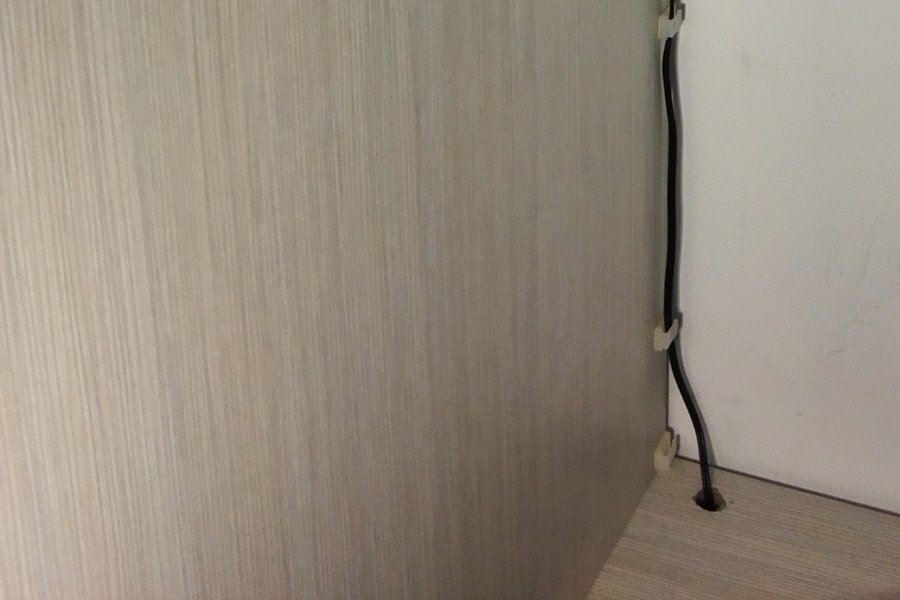
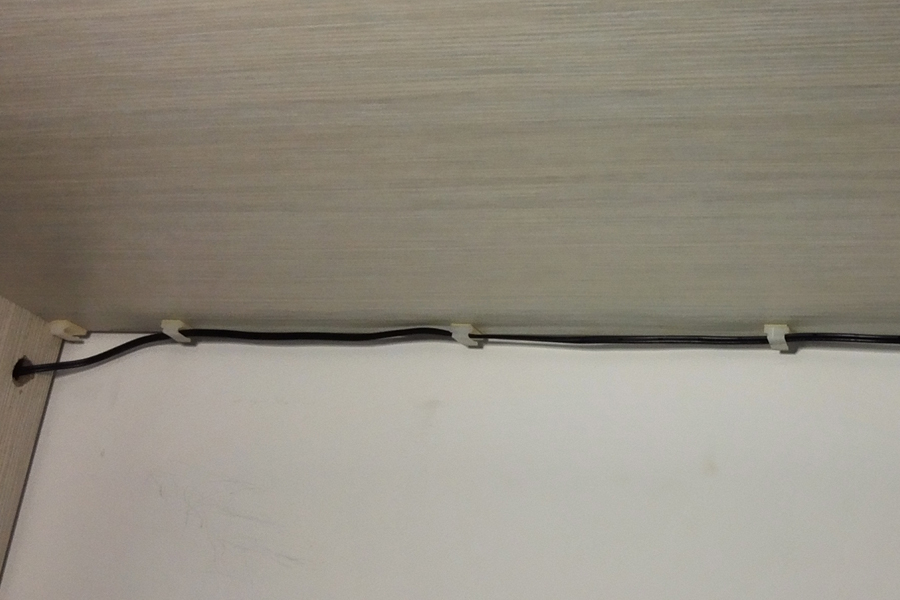
For smaller wire management needs, cable clips and adhesive ties can keep wires neatly organized and tucked out of sight .
How to Install:
- Secure cables together with cable ties to reduce clutter
- Attach adhesive clips to the underside of cabinets
- Route wires through the clips, keeping them tight against the cabinet surface
Pro tip: Choose clear or paintable clips that blend with your cabinetry. This method works well when combined with other hiding methods — for example, using clips to guide wires toward a wire channel or drilled hole .
Method 6: Hide the Power Supply (Driver)
Best for: LED strip lights (which require transformers)
Many LED under cabinet lights require a driver (transformer) to convert standard household voltage (220V) to low voltage (12V or 24V). These drivers can be bulky and unsightly .
Where to Hide the Driver:
| Location | Benefits | Drawbacks |
|---|---|---|
| Inside a cabinet | Completely hidden | Takes up cabinet space |
| On top of cabinets | Out of sight (if cabinets don’t reach ceiling) | May be visible in open spaces |
| Under lower cabinets | Accessible | May be difficult to reach |
| In a dedicated light box | Professional look | Requires custom fabrication |
Key tip: If storing the driver inside a cabinet, place a shelf high up and tuck the driver and wires behind it for a clean look .
Additional Considerations
Power Source Planning
Before you start, consider where your power source is located. If the outlet is far from your lights, you may need to :
- Use an extension cord (choose one that can be hidden)
- Hire an electrician to install a new outlet
- Use a plug-in system that routes power from existing outlets
Code Compliance
For permanent installations, ensure your wiring meets local electrical codes:
- Use wires and components rated for kitchen environments
- Avoid overloading circuits
- Flexible cords can’t be used as permanent wiring unless specifically rated for that use
If you’re unsure about any part of the installation, consulting an electrician is highly recommended .
Choose the Right Light Type First
Some lighting types make wire hiding much easier:
- Plug-in systems — easier to manage but may have more visible wires
- Hardwired systems — more professional but require an electrician
- Wireless puck lights — no wires at all, but require batteries and shorter runtime
Quick Summary: Which Method Should You Choose?
| Your Situation | Best Method |
|---|---|
| You rent or don’t want to drill | Wire channels (raceways) or Cable clips |
| You own and want a permanent solution | Drill through cabinets or Route behind cabinets |
| You’re doing a full renovation | Route behind cabinets or Build a light box |
| You want a quick, cheap fix | Add a wood valance or Use cable clips |
| You’re installing LED strips | Hide the driver in a cabinet or on top of cabinets |
Final Thoughts
Hiding wires under cabinet lighting doesn’t have to be complicated. The right method depends on your:
- Cabinet type and layout
- Budget and timeline
- Whether you own or rent
- Willingness to drill or make modifications
For most homeowners, wire channels (raceways) offer the best balance of simplicity, effectiveness, and cost — especially if you paint them to match your cabinets. For a more permanent solution, drilling through cabinets and hiding the driver inside provides a truly clean finish.
Whichever method you choose, taking the time to hide those wires will make your kitchen look more professional, more polished, and more valuable.
Need help choosing the right under cabinet lights for your project?
We supply LED under cabinet lights with multiple color temperature options (3000K, 4000K, 6000K), certified adapters for EU (CE/RoHS) and US (UL) markets, and flexible specifications to match your needs.
📩 Contact us to discuss your requirements and get a quote.
#UnderCabinetLights #KitchenLighting #WireManagement #DIYLighting #HomeImprovement #LEDLighting #CabinetLighting
Request Pricing & Technical Details
Please fill in the form below and our team will reply within 24 hours.